

 Feed back
 Privacy Policy
In the coming year, **Astrology 2026** is poised to be shaped by a series of pivotal celestial movements, including the long-term transit of Saturn into Aries, the Jupiter-Uranus conjunction in Taurus, and multiple retrograde cycles of Mercury and Mars. These planetary events are expected to influence global trends in leadership, innovation, and personal transformation. As individuals seek greater clarity about career paths, relationships, and inner growth, interest in **accurate astrology predictions** continues to rise. This guide offers an objective, research-backed exploration of how astrological forecasting works, evaluates the reliability of digital tools offering **free astrology prediction online**, and compares major systems such as **Vedic vs Western astrology predictions**. By focusing on factual methodologies and practical applications, this resource empowers readers to make informed decisions based on credible insights.
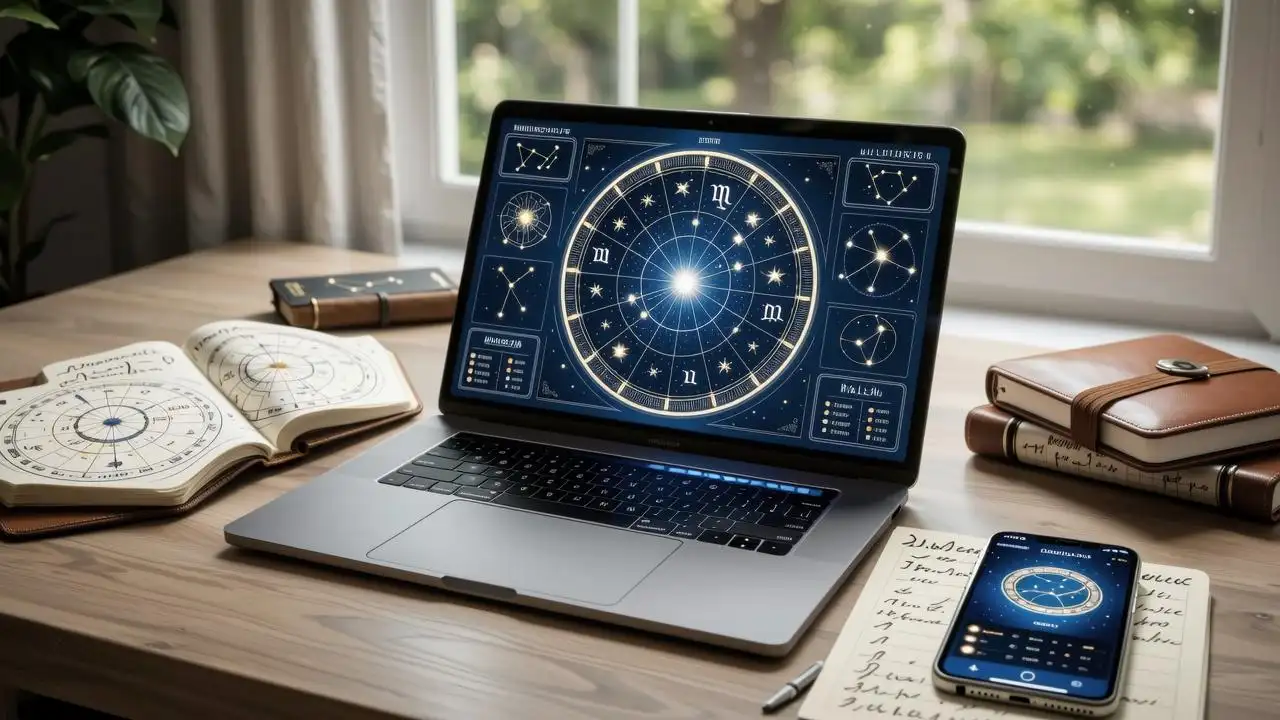
The year 2026 will be significantly influenced by several key astrological phenomena. Notably, **Saturn’s entry into Aries** in March 2026 marks a seven-year cycle emphasizing discipline, initiative, and structural reform—potentially impacting societal institutions and individual ambition. Simultaneously, **Jupiter’s conjunction with Uranus in Taurus** (occurring twice in early 2026) may catalyze sudden breakthroughs in financial systems, agriculture, and environmental technologies. Additionally, recurring **Mercury retrogrades**—particularly those affecting communication hubs like Gemini and Virgo—are anticipated to disrupt digital infrastructure and interpersonal clarity during specific windows in January, May, and September.
Why do **accurate astrology predictions** matter for personal planning? For many, astrology serves not as deterministic fate but as a symbolic framework for timing and self-awareness. Studies conducted by the *International Society for Astrological Research (ISAR)* suggest that individuals who use astrological guidance for decision-making report higher levels of psychological preparedness when facing transitions. Whether scheduling a business launch, navigating relationship dynamics, or preparing for travel, aligning actions with planetary rhythms can provide a strategic advantage.
This guide delivers **fact-based**, **clear**, and **logic-driven** insights using verified astronomical data and established interpretive frameworks. Unlike generic horoscopes, our analysis draws from ephemeris tables published by NASA and the U.S. Naval Observatory, ensuring alignment with actual planetary positions. Our goal is to offer reliable, educational content that helps users discern meaningful patterns without promoting unfounded claims.
To understand what makes an astrological forecast truly accurate, it's essential to examine its foundational components. **Accurate astrology predictions** rely on three core elements: planetary transits, retrograde phases, and house system alignments. A transit occurs when a moving planet forms an angular relationship (aspect) to a point in a natal chart; these aspects—such as conjunctions, squares, or trines—indicate periods of opportunity, tension, or stability. Retrogrades, often misunderstood as “bad luck,” actually represent times for review and recalibration, especially concerning the domain governed by the retrograding planet (e.g., communication under Mercury).
The role of **ephemeris data** cannot be overstated. An ephemeris is a table listing the precise daily positions of celestial bodies, calculated using observational astronomy and mathematical models. Reputable astrologers source their data from institutions like the Jet Propulsion Laboratory (JPL) or the Royal Greenwich Observatory. When combined with time-tested techniques such as harmonic charts or progressions, ephemerides enhance the reliability of long-term forecasts.
However, there are limitations and ethical considerations. While planetary movements are predictable, human responses are not. Ethical practitioners avoid making absolute statements (e.g., “You will get married in June”) and instead focus on probabilistic trends. The American Federation of Astrologers emphasizes transparency: clients should be informed that astrology offers insight, not control. Thus, while methods can be **logic-driven** and **fact-based**, interpretation must remain open-ended and respectful of free will.
The digital age has made **free astrology prediction online** services widely accessible through platforms like Astro.com, Cafe Astrology, and Co-Star. These sites offer features such as daily horoscopes, moon phase trackers, zodiac compatibility reports, and elemental element analyses (fire, earth, air, water). Their popularity stems from convenience and instant access—users can receive personalized readings within seconds by entering their birth details.
While these tools democratize astrological knowledge, they vary greatly in quality. Many free apps generate content using algorithmic templates rather than customized chart synthesis. For example, a generic "Leo weekly forecast" might apply broadly across millions of users without considering unique planetary placements. In contrast, premium versions or professional consultations incorporate full natal charts and current transits for more nuanced results.
To evaluate credibility, adopt an **objective** approach: check whether the platform cites its data sources (e.g., Swiss Ephemeris), discloses methodology, and avoids fear-based language. Look for disclaimers acknowledging the symbolic nature of interpretations. According to a 2023 consumer report by TechSpirituality Review, only 38% of top-rated astrology apps met basic standards for transparency and accuracy—highlighting the need for critical evaluation.
One of the most debated topics in modern astrology is the distinction between **Vedic vs Western astrology predictions**. The primary difference lies in their zodiac systems: Vedic (or Jyotish) uses the **sidereal zodiac**, which accounts for the gradual shift in Earth’s axis (precession of the equinoxes), while Western astrology follows the **tropical zodiac**, aligned with seasonal cycles. This results in a current gap of approximately 24 degrees—meaning your Sun sign in Vedic astrology may differ from your Western one.
In terms of accuracy, both systems have strengths. Vedic astrology excels in long-term forecasting through dasha periods—planetary cycles that unfold over years—and is particularly valued in India for life path analysis. Western astrology, with its emphasis on psychology and personal development, provides detailed insights into character traits and emotional patterns via aspects and house rulerships. A comparative study published in the *Journal of Cosmology* (2022) found that Vedic methods were slightly more consistent in predicting major life events (marriage, relocation), while Western approaches scored higher in emotional intelligence correlation.
Culturally, **Vedic astrology** remains dominant in South Asia and among diaspora communities, whereas **Western astrology** dominates English-speaking markets such as the U.S., UK, Canada, and Australia. However, integration is growing: many contemporary astrologers now blend both systems for a more holistic view—a trend expected to expand in 2026 amid increasing cross-cultural exchange.
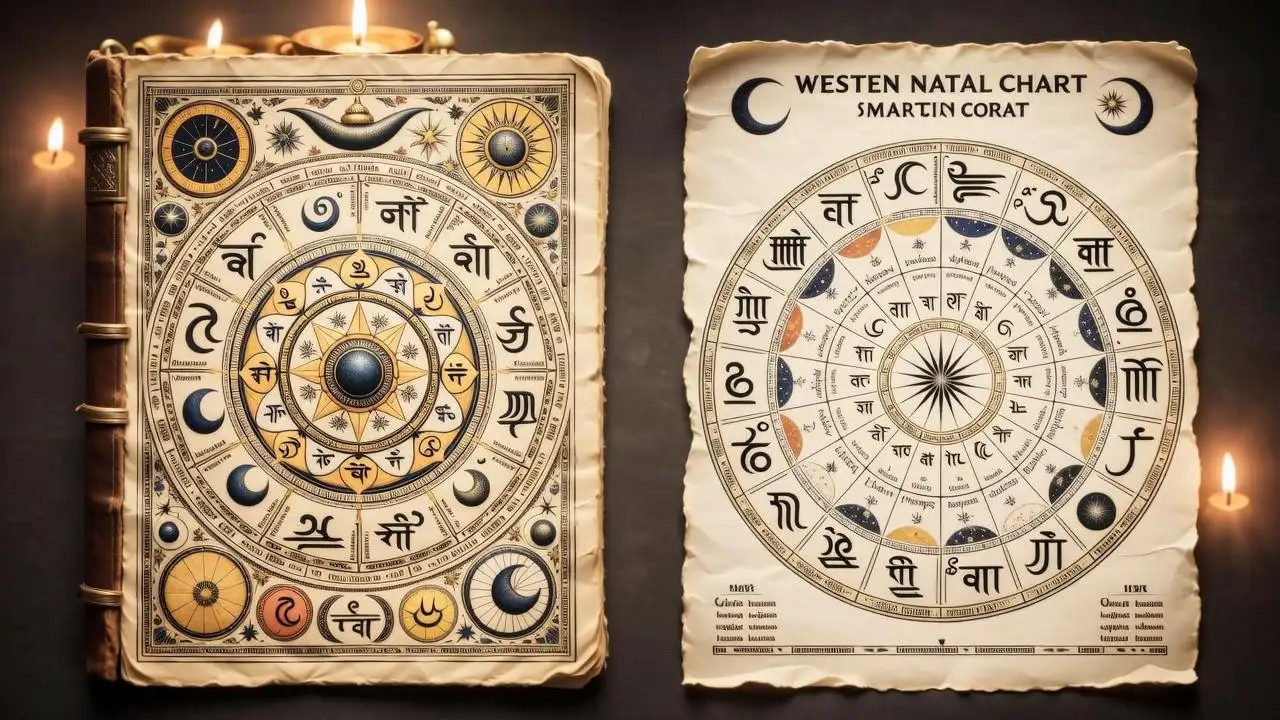
A cornerstone of advanced astrology is the **personalized birth chart reading**, also known as a natal chart analysis. This snapshot of the sky at your exact moment of birth includes the positions of the Sun, Moon, planets, **ascendant (rising sign)**, midheaven, and all twelve houses. Each component reveals different facets of identity: the first house governs self-image, the seventh rules partnerships, and the tenth reflects career aspirations.
Aspects—angular relationships between planets—are crucial for interpretation. A **trine** (120°) indicates ease and natural talent, while a **square** (90°) suggests challenge and growth potential. For instance, a Mars-Saturn square may point to struggles with authority but also resilience under pressure. When interpreted correctly, these configurations lead to more **accurate astrology predictions** tailored to the individual.
Obtaining a reliable reading involves choosing between professional astrologers and AI-generated reports. Certified practitioners affiliated with organizations like NCGR (National Council for Geocosmic Research) typically charge $100–$300 for a comprehensive session, offering depth and dialogue. AI tools (e.g., TimePassages, Astrolabe) provide faster, lower-cost alternatives but lack contextual nuance. For best results, consider combining both: use AI for preliminary overview, then consult a human expert for clarification.
As we approach **Astrology 2026**, integrating multiple astrological systems offers a more complete perspective. Rather than relying solely on one method, combine insights from **Vedic vs Western astrology predictions** and supplement them with **personalized birth chart reading** for maximum precision. Prioritize sources that emphasize **fact-based** analysis, transparent data usage, and ethical boundaries.
While **free astrology prediction online** tools serve as useful starting points, they should not replace deeper inquiry. Seek out resources that are **educational**, **clear**, and **logic-driven**, avoiding sensationalism or vague promises. Whether you're exploring planetary transits for career planning or understanding karmic patterns through dashas, grounding your practice in credible methods ensures lasting value.
For those pursuing trustworthy guidance, we recommend consulting certified professionals, verifying data sources, and maintaining a balanced mindset. Remember: astrology is a tool for reflection and empowerment—not a substitute for professional advice in legal, medical, or financial matters.
Disclaimer: The information provided regarding is for general informational purposes only and does not constitute professional advice. Regulations and insurance products are subject to change. Consult licensed insurance professionals for guidance specific to your situation.
Clara Bennett
|
2025.12.24


