

 Feed back
 Privacy Policy
In recent years, there has been a marked increase in the global interest in vedic astrology as a reliable tool for personal insight and long-term future planning. Unlike trend-driven horoscopes, the Jyotish astrology system offers a structured, time-tested framework rooted in ancient Indian philosophy. As we approach 2026, individuals across cultures are turning to this profound tradition to navigate complex life decisions—especially in areas such as career advancement, health management, and relationship development. The growing appeal lies in its predictive depth and personalized approach, particularly through methods like Vedic birth chart analysis, dashas in Vedic astrology, and Kundli matching for marriage.
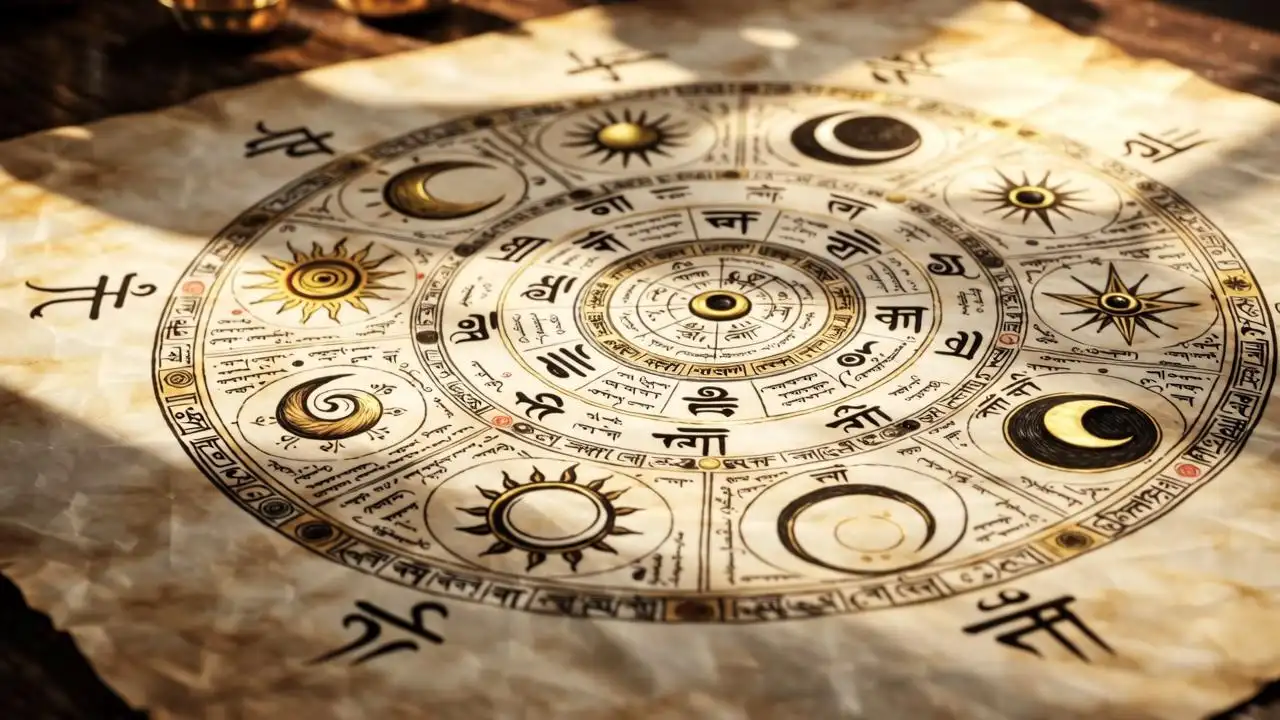
The relevance of Jyotish principles in modern life cannot be overstated. From Silicon Valley executives consulting astrologers before major business launches to couples using Kundli compatibility reports before engagement, the integration of these practices into contemporary decision-making reflects a broader cultural shift. People are no longer viewing astrology as mere superstition but as a complementary wisdom system that enhances self-awareness and strategic planning. This guide is designed to help readers understand the foundational elements of the Jyotish system, including how to interpret natal charts, use dasha cycles for timing events, and evaluate relationship compatibility with precision.
The Jyotish astrology system, often referred to as "the science of light," traces its origins to the ancient Rigveda, one of the oldest sacred texts in human history. Over centuries, it was further developed in classical Sanskrit works such as the Brihat Parashara Hora Shastra and various Puranas. These scriptures outline a comprehensive cosmological model where celestial movements directly influence earthly experiences. What distinguishes Jyotish from other astrological traditions is its emphasis on karma, dharma, and the soul's evolutionary journey across lifetimes.
At the core of this system are four fundamental components: Grahas (planets), Rasis (zodiac signs), Bhavas (houses), and Nakshatras (lunar mansions). Each Graha represents specific energies—such as Mercury for communication or Mars for action—and their placement at birth shapes personality traits and life tendencies. The Rasis function similarly to Western astrology’s zodiac but are calculated using the sidereal zodiac, which accounts for the actual position of constellations in the sky. This leads to a key difference between Western and Vedic systems: while Western astrology uses the tropical zodiac based on Earth’s seasons, Vedic astrology relies on the sidereal zodiac aligned with fixed stars, resulting in typically a 23–24 degree offset.
This astronomical distinction gives the Jyotish astrology system greater alignment with observable star positions, enhancing its accuracy in long-term predictions. Moreover, the inclusion of 27 Nakshatras—each spanning 13°20' along the ecliptic—adds granular detail to personality profiling and event timing. Together, these elements form a robust structure that supports deep analysis within its cultural context, making it not only an astrological practice but also a spiritual discipline.
Central to any meaningful interpretation in Jyotish is the process of Vedic birth chart analysis. Also known as a Kundli, this diagram maps the positions of all nine planets (including shadow planets Rahu and Ketu) at the exact moment of an individual’s birth—factoring in date, time, and place. To generate a Kundli accurately, astrologers use precise ephemeris data and software calibrated to the Lahiri Ayanamsa, the most widely accepted standard in modern Vedic astrology.
Once created, the chart reveals the Ascendant or Lagna, which determines the rising sign and sets the sequence of the 12 Bhavas (houses). Each house governs different aspects of life—from identity (1st house) to wealth (2nd), siblings (3rd), home (4th), and so on up to liberation (12th). Interpreting planetary influences involves assessing which planet rules each house, where those planets are placed, and whether they form beneficial or challenging configurations.
A critical aspect of Vedic birth chart analysis is evaluating planetary strength through a method called Shadbala, which measures six types of strength: positional, directional, temporal, motional, elemental, and relational. Planets scoring high in Shadbala exert stronger positive effects. Additionally, astrologers look for special combinations known as yogas—such as Gaja Kesari Yoga (Jupiter-Moon conjunction)—which can indicate prosperity or leadership potential. Conversely, negative patterns like Mangal Dosha (Mars affliction in certain houses) may suggest challenges in marriage unless mitigated by other favorable factors.
One of the most powerful tools in the Jyotish toolkit is the concept of dashas in Vedic astrology. While the birth chart shows potential, dashas reveal *when* those potentials manifest. Dashas are planetary periods that activate specific areas of life based on the transiting influence of a given planet over a set number of years.
The most commonly used model is the Vimshottari Dasha system, which operates on a 120-year cycle divided among nine planets. Each planet governs a major period (Mahadasha): Ketu (7 years), Venus (20), Sun (6), Moon (10), Mars (7), Rahu (18), Jupiter (16), Saturn (19), and Mercury (17). Within each Mahadasha, sub-periods (Antardashas) further refine timing down to months or even days.
For example, someone entering their Jupiter Mahadasha in 2026 may experience growth in wisdom, spirituality, or financial stability—especially if Jupiter is well-placed in their natal chart. Conversely, a person undergoing Saturn’s major period might face delays or responsibilities requiring endurance. By cross-referencing current dashas with ongoing planetary transits, astrologers can offer accurate forecasts about career shifts, health concerns, or relationship milestones. This makes timing events far more precise than generic annual horoscopes.
In many South Asian communities, Kundli matching for marriage remains a vital step before formalizing engagements. Far from being merely ritualistic, this process applies rigorous analytical techniques to assess emotional, physical, and karmic compatibility between partners. Its purpose extends beyond tradition—it aims to ensure long-term marital harmony and family well-being.
The cornerstone of this evaluation is the Ashtakoota system, which calculates a compatibility score out of 36 points across eight parameters: Varna (spiritual class), Vashya (mutual attraction), Tara (destiny alignment), Yoni (sexual compatibility), Graha Maitri (mental rapport), Gana (temperament), Bhakoot (emotional bonding), and Nadi (genetic complementarity). A score above 18 is generally considered acceptable; scores above 25 indicate strong compatibility.
Critical red flags include Mangal Dosha, where Mars is positioned in the 1st, 2nd, 4th, 7th, 8th, or 12th house, potentially causing discord in married life. However, modern interpretations emphasize mitigation through co-dasha analysis or remedial measures. Similarly, mismatched Nadi (classified as Vata, Pitta, Kapha) is traditionally seen as risky for progeny health, though some scholars debate its absolute necessity today. When combined with psychological understanding, Kundli matching for marriage becomes a holistic tool rather than a rigid filter.
Looking ahead to Astrology 2026, several significant planetary transits will shape collective and individual experiences. Most notably, **Jupiter** will move into **Gemini** in May 2026, bringing opportunities for intellectual expansion, communication breakthroughs, and educational pursuits. Since Gemini is ruled by Mercury, this transit favors writers, teachers, tech entrepreneurs, and students preparing for competitive exams.
Simultaneously, **Saturn** will remain in **Pisces** until early 2026, then transition into Aries—marking a shift from introspective restructuring to assertive discipline. During its Piscean phase, individuals may feel pressure to dissolve illusions, release outdated habits, or confront hidden fears. Those with strong water-sign placements should prepare for emotional purification, while fire-sign natives may experience delayed progress due to karmic reckonings.
The lunar nodes—**Rahu in Libra** and **Ketu in Aries**—will continue influencing social dynamics throughout 2026. Rahu’s presence in Libra amplifies desires for partnership, justice, and diplomatic solutions, sometimes leading to over-dependence on others’ validation. Ketu in Aries encourages detachment from ego-driven actions, urging individuals toward self-initiated spiritual practices.
These **planetary transits** interact dynamically with personal **dashas** and natal charts. For instance, someone running a Jupiter-Saturn combination during 2026 could see major career advancements despite initial obstacles. Meanwhile, those under difficult dashas may find relief if transiting Jupiter aspects afflicted houses. These **future predictions** underscore the importance of integrating macro-level trends with micro-level chart analysis for actionable guidance.

As we move deeper into an era defined by uncertainty and rapid change, the timeless insights of vedic astrology offer clarity and direction. Whether you're exploring your destiny through Vedic birth chart analysis, navigating life stages via dashas in Vedic astrology, or seeking harmonious relationships through Kundli matching for marriage, Jyotish provides a structured path grounded in both observation and tradition.
To make the most of this knowledge, individuals are encouraged to seek consultations with qualified Vedic astrologers who combine technical expertise with ethical judgment. Personalized readings allow for nuanced interpretations that go beyond general forecasts, offering true personal guidance. Ultimately, the power of the Jyotish astrology system lies not in predeterminism, but in empowering individuals to act with awareness—balancing free will with karmic patterns, and modern logic with ancient cultural wisdom.
Disclaimer: The information provided in this article, including content related to Astrology 2026, is for reference only and does not constitute professional advice in any related field. Readers are advised to make decisions based on careful consideration of their personal circumstances and, when necessary, to consult qualified professionals with appropriate expertise. The author and publisher of this article shall not be held responsible for any consequences resulting from actions taken based on the content of this article.
Arun Patel
|
2025.12.24


